
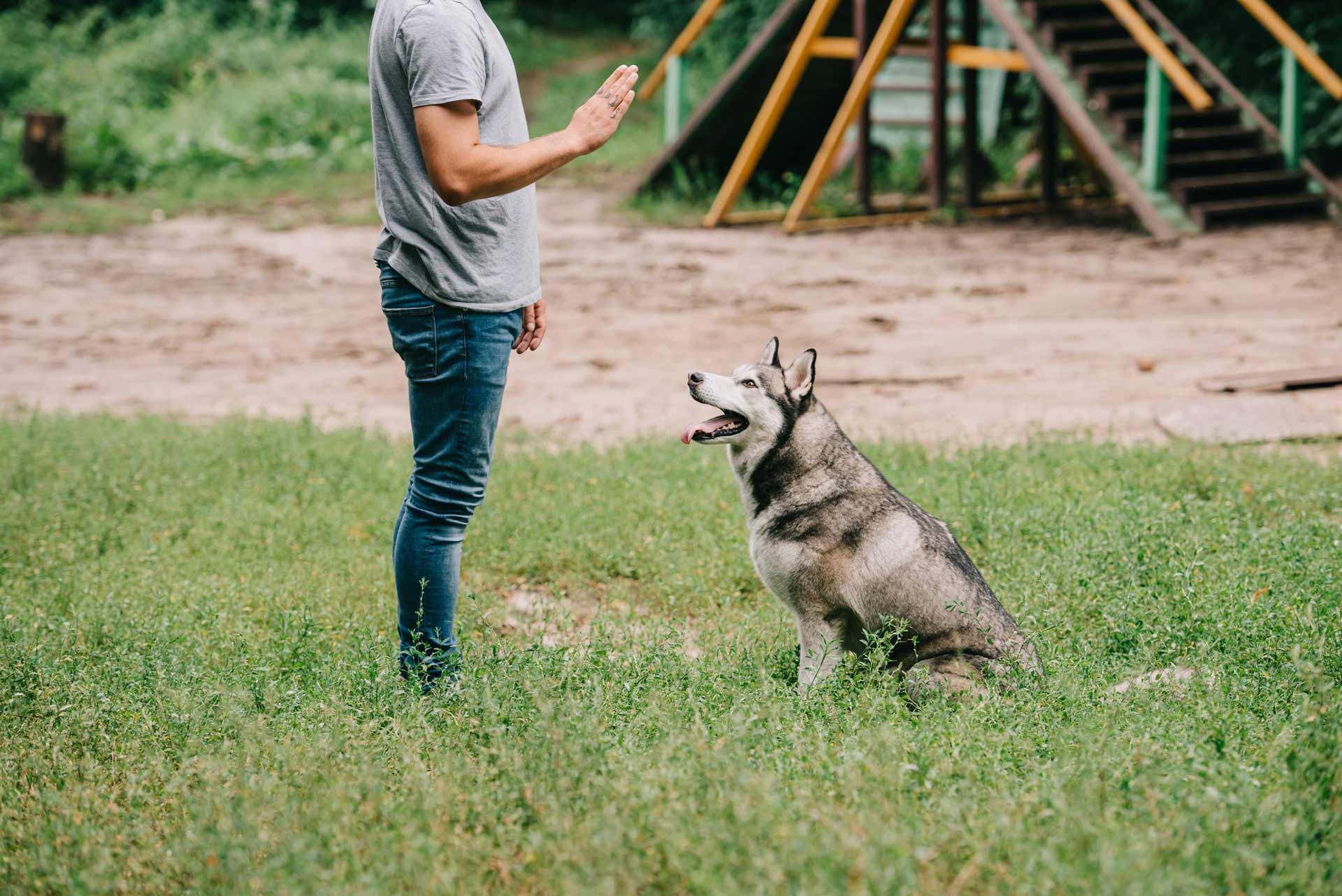
Home Manners Obedience
Yes Marker
1. A positive word used to tell your dog they did the right thing and will get a reward.
2. Helps your dog clearly understand which behavior earns praise or treats.
3. A marker word that builds confidence and reinforces good behavior.
4. Used to instantly mark correct actions and keep training fun and rewarding.
5. Signals your dog that they made the right choice and a reward is on the way.
No Marker
1. A gentle word to indicate the behavior was not correct—no reward this time.
2. Helps your dog understand mistakes calmly and learn the correct response.
3. Used to guide the dog without punishment, encouraging better behavior next time.
4. A clear cue to let your dog know to try again.
5. Teaches boundaries respectfully, helping improve focus and understanding.
Recall Command:
The recall command teaches your dog to come when called. When the master calls, the dog runs directly to
the master and sits neatly in front. After the master gives the heel command, the dog moves to the left side
and automatically sits without needing another command. This builds perfect obedience and focus.
Basic Commands Exercise:
Sit, Down, Sleep, Roll, and Stand.
In Home Manners Obedience, we focus on teaching your dog to perform each command individually with
precision and focus. Unlike the Puppy Basic Foundation—where puppies follow a fixed sequence of
commands (Sit → Down → Sleep → Roll → Stand)—here the dog learns to wait for each specific cue instead of
predicting the next one. This helps improve understanding, control, and responsiveness to the master’s
commands.
Send Away Drop Exercise:
In this exercise, the dog is trained to go to an activated or targeted spot on command. Once it reaches that
spot, the dog will automatically lie down without any further cue. This exercise is very useful for crate
training, cage training, and mat or bed training, as it helps the dog understand how to go to a specific place
and stay calm there.
Leash Manners Exercise:
Not like the basic Puppy Foundation, this exercise focuses on advanced leash control. Dogs are trained for left
turn, right turn, left about-turn, and right about-turn, while practicing different walking speeds—slow walk,
normal walk, and speed walk. When the master stops, the dog automatically goes to sit position. The stay
command is reinforced during the exercise, improving focus and patience. The dog consistently stays near
the master’s left leg, without forging, lagging, or moving sideways, ensuring polished and reliable leash
manners.
Stay Command:
In this exercise, dogs are trained to hold the stay command in sit, down, sleep, and stand positions, with a
strong focus on controlling impulses. For sit, down, and stand positions, advanced proofing is done using
distractions such as funny noises or people calling the dog’s name—the dog must remain in position and not
move. Even when touched, the dog should not break the command. For the sleep position, distractions are
not applied, allowing the dog to rest while staying in place. Additionally, dogs are taught the motion stay, an
advanced command where, whether running, walking, or moving toward the master, giving the stay
command will make the dog instantly freeze. This training builds exceptional focus, impulse control, and
reliable obedience in all situations.
Impulse Control Exercise:
This exercise teaches dogs to patiently control their impulses in daily situations. When food is given, the dog
waits in the sit position and eats only after receiving the command. Before going for a walk, the dog
automatically sits near the door and waits while the master goes outside and places footwear; the dog moves
out only after being called. The exercise also makes it easier to handle the dog—placing a neck collar, leash, or
slip lead becomes simple, as the dog remains calm, composed, and responsive, making everyday routines
smooth and stress-free.
Fancy Commands:
In this exercise, dogs learn fun and impressive tricks beyond basic obedience. They are trained to shake
hands with both front paws, speak on command by barking, and spin to the left and right. Dogs with strong
back legs can also perform a pretty sit, lifting their front paws while staying in the sit position. The ability to
perform pretty sit command depends on the dog’s age, breed, and physical fitness. These commands motivate
and refresh the dog while building coordination, confidence, and engagement, making training enjoyable for
both the dog and the owner.
Muzzle Command:
This command teaches your dog to calmly wear a muzzle on cue. It ensures safety during vet visits, grooming,
or in public places, helps prevent accidental biting, and makes handling the dog easier and stress-free for both
the dog and the owner.
Duration
Happy dog with high food drive: 2 months
Reactive, dominant, or stubborn dog: 3 months
Disclaimer
The Home Manners Obedience Package is an advanced step after the Puppy Basic Foundation, focusing on
perfection in every exercise. Hand signals, body language, and gestures are kept subtle, unlike the full signals
used in Puppy Foundation. Each dog will expect a reward—whether food or toys—after completing the
exercise. Dogs with natural prey drive work for ball, toys or tug instead of food, as this drive is inherited by
genetics.
Registration
Don’t wait to start your puppy’s training! Register now and give your furry friend the best start in life.
Need Help?
Our team is here to guide you every step of the way. If you have any questions about the program or need additional information, don’t hesitate to reach out!
- +91 87782 51225
- info@anbuk9school.com
- Everyday 08:00 AM - 18:00 PM
